
In Vivo Pharmacology
At Sai Life Sciences, our In Vivo Pharmacology platform empowers drug discovery programs with robust target validation, efficacy assessment, and early safety evaluation. With a portfolio of 250+ well‑established, disease‑relevant animal models and integrated PK/PD capabilities, we deliver high‑quality, decision‑enabling insights that accelerate candidate progression.
Our state‑of‑the‑art animal research facility – accredited by AAALAC and OLAW – sets global benchmarks in standards and compliance. Backed by a team of highly skilled scientists who approach every study with scientific rigour and compassion, we develop and validate both routine and customised models to generate biologically meaningful, decision‑enabling data.
Therapeutic Area & Model Expertise
-
Syngeneic, xenograft, and humanized mouse models are used to evaluate tumor growth inhibition, immune modulation, and combination approaches. Studies may include tumor kinetics, immune profiling, and PK/PD correlation.
- Syngeneic Tumor Models
- Human Xenograft Tumor Models
- Humanized Mouse Model
- PDX Tumor Model
- Orthotopic & Metastasis Tumor Models
- Tet‑inducible oncogene Mouse model
- Resistance Tumor Model
- Bone Marrow Mutant Transplantation Mouse Model
-
Models of autoimmune and inflammatory diseases such as rheumatoid arthritis, asthma, colitis, and psoriasis are supported by cytokine analysis, immune cell characterization, and histopathology.
- Inflammatory Bowel Disorder
- Skin Disorder: AD, Psoriasis, DTH & Fibrosis
- Liver Injury Models
- Acute & Chronic renal failure
- Rheumatoid Arthritis, Gout, Osteoarthritis, Multiple Sclerosis, SLE
- Primary Biliary Cholangitis
-
CNS models include Alzheimer’s disease, Parkinson’s disease, epilepsy, depression, and schizophrenia. Behavioral, biochemical, and histological endpoints are incorporated as appropriate to study objectives.
- Parkinson’s Disease
- Depression
- Alzheimer’s Disease
- Anxiety & Epilepsy
- ALS & Movement Disorder
- Huntington’s Disease
- Gaucher Disease
- Duchenne Muscular Dystrophy
-
Models include diet-induced obesity, STZ-induced and genetic diabetes, and cardiac hypertrophy. Metabolic phenotyping, glucose tolerance testing, lipid profiling, and echocardiography are available where required.
- Diabetic Models: Type 1 & Type 2
- Obesity: Diet induced obese (DIO)
- MASH & Liver Fibrosis
- Dyslipidemia & Osteoporosis
- Primary & Secondary Hypertension
- Pulmonary Hypertension
-
Acute, inflammatory, neuropathic, and cancer pain models are supported by functional and sensory endpoint measurements.
- Acute Pain
- Acute Tonic/ Persistent Pain
- Inflammatory Pain
- Osteoarthritic Pain
- Post operative Pain
- Chronic Neuropathic Pain
-
Capabilities include fertility and implantation studies,
- Male Reproductive Disorder
- Female Reproductive Disorder
- Alopecia & Lymphedema
- Alcohol Addiction
-
Capabilities include airway inflammation models, and pathogen-specific infectious disease systems, with relevant biomarker and dose–response assessments.
- Infectious Diseases: Bacterial, Viral & Fungi
- Idiopathic Pulmonary Fibrosis
- Asthma
- Emphysema
- Acute Lung Injury Model
- Lung Function Tests
- Acute Renal Injury
- Chronic Renal Failure
- Acute Renal Failure
- Renal Fibrosis
-
- ELISA
- Multiplexing: MSD & Luminex
- Conventional & Automated Western Blot (JESS)
- RT PCR-Gene expression analysis
- FACS – TIL Profiling
- Cell Engineering & Organoid development
Study Design Approach
Our in vivo study framework is designed to align with the specific stage of development, therapeutic indication, and modality of each compound. The goal is to generate clear, interpretable exposure–response and efficacy insights. We conduct comprehensive in vivo efficacy studies across diverse therapeutic areas, ensuring pharmacological activity is evaluated under controlled, reproducible conditions. The resulting data strengthen mechanism‑of‑action understanding, support candidate differentiation, and guide informed advancement decisions.
Our Study Portfolio Includes:
- Animal Proof‑of‑Concept (POC) studies
- Acute Pharmacodynamic (PD) studies for early‑stage screening
- PK-PD studies to characterize target engagement
- Dose tolerability studies incorporating safety‑related endpoints
- Efficacy assessments in scientifically relevant disease models
- Satellite PK–PD arms to complement main study cohorts
- Integrated PK sampling and PD/biomarker evaluations wherever necessary
Facilities & Technical Infrastructure
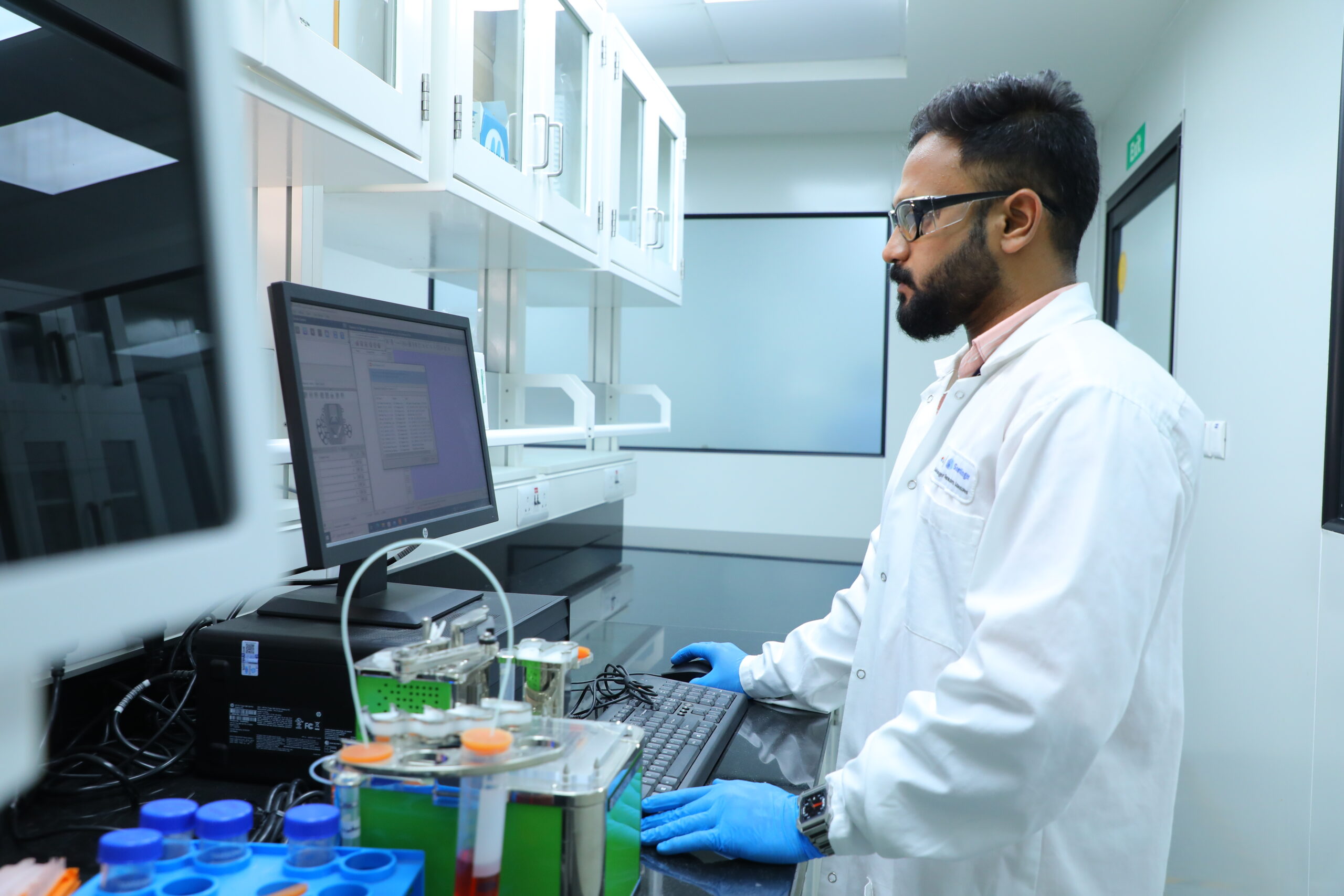
Our 30,000 sq. ft. Vivarium facility hosts dedicated In Vivo Pharmacology labs built around key therapeutic areas- enabling deeper insights and better science.
Pharmacology Lab – Key Instruments
- Oncology: IVIS (In Vivo Imaging System-Perkin) & X-ray Irradiator
- Respiratory & Immunology: BioLite Small Animal Intubation system, Inexpose (IMKA), Inhaled drug delivery, Whole-body plethysmography, Flexivent & Rodent Micro CT etc.
- Cardiovascular & Metabolic: DEXA, Rodent Treadmill, PowerLab 26T (BP, HR, EEG & ECG), NIBP & Metabolic cages etc.
- Pain: Dynamic Plantar Aesthesiometer (DPA), Plantar Test Apparatus (Hargreaves method) & Dynamic Weight Bearing System etc.
- Neuroscience: EthoVision XT/ All Mazes Software, Stereotaxic Instrument (Rat & Mice), All Mazes, ETC, Force Plate Actimeter, Grip Strength Meter & Rotarod etc.
- Ex-Vivo: gentleMACS Dissociator, FACS Celesta (up to 14 colors), Novocyte Penteon Flow cytometer (up to 30 colors), MSD, Luminex, JESS-Protein Simple, PCR/RT-PCR, Magnetic sorter etc.
- Histopathology: LASX software, Aperio GT 450 – Whole slide scanner, BOND RX Fully Automated Research Stainer, Cryostat, Leica DM3000 LED Microscopes With HD k3C camera and Fluorescent System etc.
- Clinical Chemistry & Hematology: AU480 Beckman Coulter, Mindray BC5000 Vet, Starlabs Elect 3 & Stago, Start4 etc.
Frequently Asked Questions
Yes. Sai Life Sciences develops custom in vivo models tailored to specific research objectives across oncology, CNS, inflammation, and infectious diseases.
Validated protocols are adapted to client-defined specifications to ensure translational relevance and reproducibility. Cross-functional coordination with biology, DMPK, and toxicology teams supports efficient data generation and interpretation for early efficacy evaluation, PK/PD assessment, and progression toward IND-enabling studies.
Integration is supported through coordinated program management and aligned operational workflows. PK/PD studies generate exposure–response data that inform DMPK bioanalysis, pharmacokinetic profiling, and metabolite assessment, while emerging safety observations are evaluated in collaboration with toxicology teams under AAALAC/OLAW-aligned operations.
Structured data sharing enables informed dose selection, optimized study design, and timely advancement decisions for development-stage programs.
Sai Life Sciences has experience conducting efficacy studies using both human tumor xenografts in immunocompromised mice and syngeneic models in immunocompetent hosts.
A range of validated tumor lines is available, and additional models can be developed as required. Studies may incorporate PK/PD integration and bioanalytical support to inform dose optimization and translational interpretation.
Endpoints and biomarkers are selected based on therapeutic area and study objectives.
- Oncology: tumor volume, survival, Ki-67, caspase activation, cytokine profiling
- CNS: behavioral assessments, neurotransmitter levels, neuroinflammatory markers
- Inflammation: TNF-α, IL-6, CRP, histopathology
- Infectious disease: pathogen load and immune response markers
Where applicable, endpoints are evaluated alongside pharmacokinetic data to support exposure–response interpretation.
Yes. Clients receive full access to raw data and study reports through secure, validated digital platforms. Experimental data across biology, DMPK, toxicology, and pharmacology are captured electronically and shared in real time for transparency.
Reports are delivered in phaseappropriate formats, including detailed datasets, summary tables, and regulatorycompliant documentation. Custom reporting templates are also available to meet specific client requirements, ensuring visibility, faster decisionmaking, and alignment with global compliance standards.